Is time tracking mandatory for working students? Is there a time recording obligation for working students – and if so, how should it be implemented? This article provides a well-founded classification of the legal situation and concrete recommendations for HR managers.
In many companies, working students are a strategic instrument for securing young talent. At the same time, their employment entails specific labor and social security requirements. One of the key questions for HR is therefore:
Are working students obliged to keep time tracking?
Short answer: Yes.
Working students are normal employees under labor law. The so-called working student status only concerns the treatment under social security law – not employment law.
Since the decision of the Federal Labor Court on mandatory working time recording, employers must introduce an objective, reliable and accessible system for recording daily working time. This obligation applies to all employees , including working students.
This means for HR work:
- The working hours of working students must be fully documented.
- Working students are obliged to use the system provided properly.
- There is no exception based solely on student status.
Why time tracking is particularly relevant for working students
While the primary purpose of time tracking for full-time employees is to comply with the Working Hours Act, there is an additional dimension for working students: the 20-hour limit.
The 20-hour limit during the lecture period
As a rule, working students may not work more than 20 hours per week during the lecture period. If this limit is regularly exceeded, working student status may be revoked.
Consequences can be:
- Full social security obligation
- retroactive claims for additional contributions
- Increased non-wage labor costs
- Audit risks during tax audits
Accurate time tracking is therefore essential for the company’s social security coverage.
Transparency for additional work and overtime
Particularly during project phases or when there are staff shortages, there is a risk that working students will actually work more than contractually agreed. Without proper documentation, there is a compliance risk.
HR should ensure that any additional work performed is recorded transparently and documented in a comprehensible manner. In addition, overtime should be subject to clear approval processes so that it does not occur unchecked. It is also advisable to automatically monitor working time limits in the system, particularly with regard to legal requirements and the 20-hour limit for working students, in order to detect and avoid violations at an early stage.
Which times must be recorded?
The working time recording must include at least
- Start of daily working hours
- End of daily working hours
- Total duration of working time
Activities must be recorded both in the office and in the home office or for mobile working.
Break regulations are also important, as these are binding under working time law and must be documented accordingly. Working hours at weekends or in the evenings should also be considered and recorded separately, as special legal requirements may apply here. In addition, working hours during the lecture-free period must be carefully documented, particularly with regard to possible deviations from the usual 20-hour limit.
The documentation must be comprehensible, complete and available at all times in the event of an audit.
Who bears the responsibility?
Responsibilities are clearly distributed.
Employers are obliged to introduce a suitable time recording system and ensure its legal compliance. They are also responsible for monitoring compliance with working time regulations, including the statutory maximum working hours and break regulations.
👉 In return, working students are obliged to record their working hours correctly and truthfully and to use the time recording system provided by the company properly.
For HR, this means that corresponding processes should be clearly defined, communicated transparently and ideally anchored in contracts or internal guidelines.
How can companies implement time tracking in a legally compliant manner?
The law does not yet prescribe a specific tool. Permitted tools include
- Digital time recording systems
- web-based HR platforms
- mobile apps
- structured timesheets
⚠️ It is crucial that the system is objective, tamper-proof, traceable and auditable.
Best practices for HR departments
- Standardized system for all employee groups
- Clear regulation on the obligation to record data in the employment contract
- Automated warnings when the 20-hour limit is exceeded
- Regular internal audits of working hours
- Training new working students in the onboarding process
Digital systems like ours offer clear advantages over manual timesheets, particularly when it comes to evaluating and maintaining compliance.
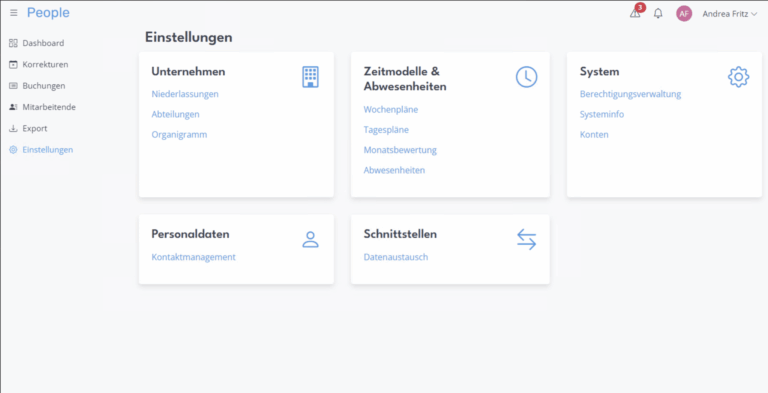
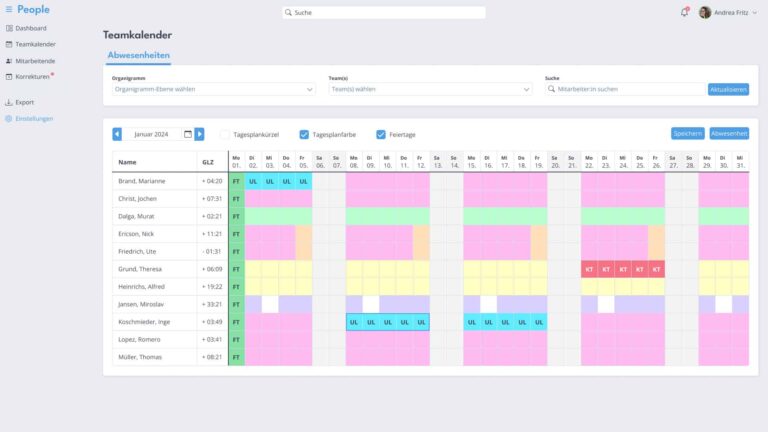
Our ZMI – Time solution is aimed at medium-sized companies and large corporations, while our ZMI – People solution offers cloud-based time tracking from just €2.50 per person and is designed for SMEs.
Conclusion: Time tracking as a working student is not an optional process
The time recording obligation for working students is clear. For HR managers, this is not just about legal requirements, but also about risk minimization and process reliability. Structured time recording helps:
- Avoid violations of the Working Hours Act
- secure the working student status
- Reduce social security risks
- Create transparency in personnel management
Companies that employ working students or are planning to do so should therefore rely on a consistent and digital time recording system at an early stage.
With our quick check, you can quickly find out which solution suits your needs: